🌏 Overview: Fast and Easy Travel Across Vietnam
Vietnam’s domestic air travel network has grown rapidly, connecting over 20 major destinations from north to south. With ...

1. Overview: Why Vietnam’s Transportation Is Unique
Stretching over 1,600 km from north to south, Vietnam’s S-shaped geography includes mountains, coastal plains, and river deltas. This diversity makes traveling between regions both fascinating and sometimes challenging.
While highways are improving, road conditions can still be narrow or winding, especially in mountainous areas. That’s why a mix of transport — trains, buses, flights, and even boats — is essential for exploring the country efficiently.
2. Trains in Vietnam 🚂
Vietnam’s railway system offers one of the most scenic and relaxing ways to explore the country.

2.1 Main Railway Route
The Reunification Express Line connects Hanoi to Ho Chi Minh City, spanning about 2,600 km and passing through iconic stops like Hue, Da Nang, and Nha Trang.
There are also smaller local routes connecting northern and central provinces, but the main line is the backbone of Vietnam’s rail network.
2.2 Seat Types and Cabins
Soft Sleeper: 4 berths per cabin (comfortable, ideal for long trips)
Hard Sleeper: 6 berths per cabin (budget option)
Soft/Hard Seat: Cheaper but less comfortable for overnight rides
Some luxury tourist trains operate on popular routes (e.g., Hanoi – Sapa, Hue – Da Nang)

2.3 Booking & Tips
Tickets can be purchased at stations, online through Vietnam Railways, or via travel agencies.
Book early during holidays (especially Tet) as tickets sell out fast.
Toilets are available on all trains, but bring your own tissue.
Overnight trains offer clean bedding, air-conditioning, and sometimes snacks or meals.
2.4 Pros & Cons
| Pros | Cons |
|---|---|
| Scenic views of mountains, coastlines, and rice fields | Slow travel (average speed ~40 km/h) |
| Comfortable (especially in sleeper cabins) | Limited routes |
| Safer than buses for long distances | May have minor delays |
| Authentic “slow travel” experience | Fewer departures compared to buses/flights |
Best routes: Hanoi – Hue – Da Nang – Nha Trang – Ho Chi Minh City, and Hanoi – Lao Cai (for Sapa).
3. Buses & Sleeper Buses 🚌
Buses are the most common way to travel around Vietnam — cheap, frequent, and available everywhere.

3.1 Types of Buses
City Buses: Operate in major cities like Hanoi, Da Nang, Ho Chi Minh City (low fare, local experience).
Standard Intercity Buses: Budget-friendly but less comfortable.
Sleeper Buses / VIP Limousine Buses: Reclining or bed-style seats, air conditioning, Wi-Fi, and charging ports.
Open Bus Tickets: Popular among backpackers — one flexible ticket allows hopping on/off between major destinations (Hanoi – Hue – Hoi An – Nha Trang – Ho Chi Minh City).
Minivans/Shuttle Buses: Faster for short or regional trips (e.g., Da Nang – Hoi An).
3.2 Booking & Advice
Buy tickets at bus stations, travel agents, hotels, or online platforms like Bookaway or 12Go Asia.
Request a lower bunk seat if you prefer less motion.
Bring snacks, a small blanket, and earplugs for long journeys.
3.3 Pros & Cons
| Pros | Cons |
|---|---|
| Cheapest travel option | Can be bumpy or delayed |
| Connects even remote towns | Overcrowded on budget routes |
| Frequent departures | Overnight rides may affect sleep |
| Flexible hop-on/off system | Quality varies by operator |
Recommended operators: Futa Bus, The Sinh Tourist, Hoang Long, and Queen Cafe Open Bus.
4. Domestic Flights ✈️
If you’re short on time, flying within Vietnam is the fastest way to travel.

4.1 Major Airlines
Vietnam Airlines (flag carrier) – reliable, full service
VietJet Air – budget airline with frequent promotions
Bamboo Airways, Pacific Airlines, Vietravel Airlines – smaller networks but growing fast
4.2 Airports
Main airports: Hanoi (HAN), Da Nang (DAD), Ho Chi Minh City (SGN), Phu Quoc (PQC), Can Tho (VCA).
4.3 Travel Tips
Flights between Hanoi and Ho Chi Minh City take around 2 hours vs. 30+ hours by train.
Book in advance for lower prices.
Budget airlines often charge extra for checked luggage.
Weather delays are rare but can happen during monsoon season.
4.4 Pros & Cons
Pros: Fast, comfortable, modern
Cons: More expensive, limited small-town coverage, potential flight delays
5. Motorbikes & Scooters 🛵
No visit to Vietnam feels complete without seeing — or riding — a motorbike!

5.1 Renting a Motorbike
Available everywhere — from hotels to rental shops.
Costs $5–10/day.
Must have an International Driving Permit (IDP) for bikes over 50cc.
Check brakes, lights, tires, and fuel before renting.
5.2 Safety Tips
Always wear a helmet and closed shoes.
Avoid rush hours in big cities.
Be cautious on mountain passes (like the Ha Giang Loop or Hai Van Pass).
Carry rain gear — sudden showers are common.
5.3 Pros & Cons
| Pros | Cons |
|---|---|
| Ultimate freedom | Higher risk of accidents |
| Low cost | Weather-dependent |
| Great for exploring villages and countryside | Requires valid driving license |
6. Taxis & Ride-Hailing 🚖
In big cities, taxis and apps are the easiest ways to move around.

6.1 Ride-Hailing Apps
Grab (like Uber) is the most popular app — offering motorbikes, cars, and food delivery.
Other apps include Be and GoViet (localized services).
6.2 Taxis
Reputable companies: Mai Linh and Vinasun.
Always ensure the meter is turned on.
For short trips, motorbike taxis (xe ôm) are faster and cheaper — available on GrabBike or at street corners.
6.3 Traditional Rides
Cyclo (Pedicab): Fun way to see Hanoi or Hue’s Old Quarter.
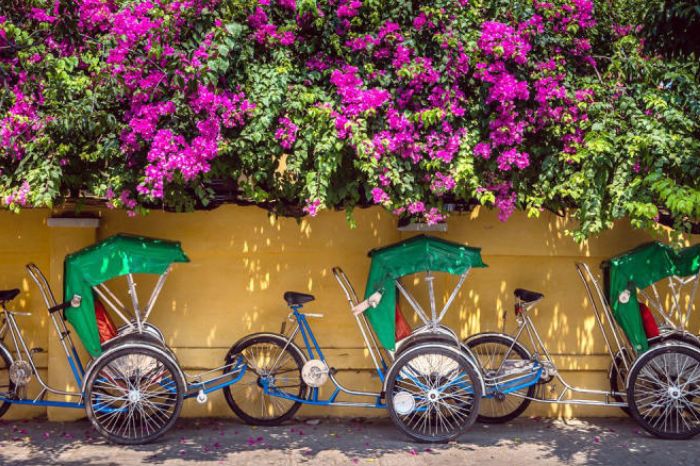
Bicycles: Common in smaller towns like Ninh Binh and Hoi An.

7. Boats & Ferries 🚤
With over 3,000 km of coastline and many rivers, Vietnam also offers travel by water.
Ferries connect the mainland to islands like Phu Quoc, Con Dao, and Cat Ba.
Saigon Waterbus operates along the Saigon River — a scenic and affordable way to see Ho Chi Minh City.
Cruise tours in Ha Long Bay or Mekong Delta offer overnight experiences on the water.
8. Comparison Table
| Transport Type | Average Time | Cost | Comfort / Experience | Best For |
|---|---|---|---|---|
| Plane | 1–3 hrs | $$$ | Fast, modern | Long distances |
| Train | Slow | $$ | Scenic, relaxing | Leisure travel |
| Bus / Sleeper Bus | Medium | $ | Budget, flexible | Backpackers |
| Motorbike | Flexible | $ | Local adventure | Short/mid-range trips |
| Taxi / Grab | Fast (city) | $$ | Convenient | Urban travel |
| Ferry / Boat | Variable | $$ | Scenic | Island or river travel |
9. Travel Tips for Foreign Visitors 🌍
Book in advance during holidays or weekends.
Keep small change for local transport.
Use ride-hailing apps to avoid scams.
Bring essentials (snacks, tissue, water, power bank).
Check schedules — traffic and weather may cause delays.
Have travel insurance, especially if renting motorbikes.
Stay flexible — sometimes “the journey” is as memorable as the destination!
Future plans: Vietnam’s government has approved a high-speed railway between Hanoi and Ho Chi Minh City (350 km/h), expected to cut travel time to 5 hours when completed around 2035.
10. Final Thoughts 🌏
Traveling around Vietnam is a journey in itself — full of contrasts and discoveries.
Take the train if you love scenic views, the bus if you’re on a budget, the plane if time is tight, or the motorbike if you crave freedom and adventure.
Whether you’re watching sunsets from a coastal train, crossing the Mekong on a ferry, or weaving through Hanoi’s alleys on a scooter, transportation in Vietnam isn’t just a way to get somewhere — it’s part of the story of your journey.
News Latest


